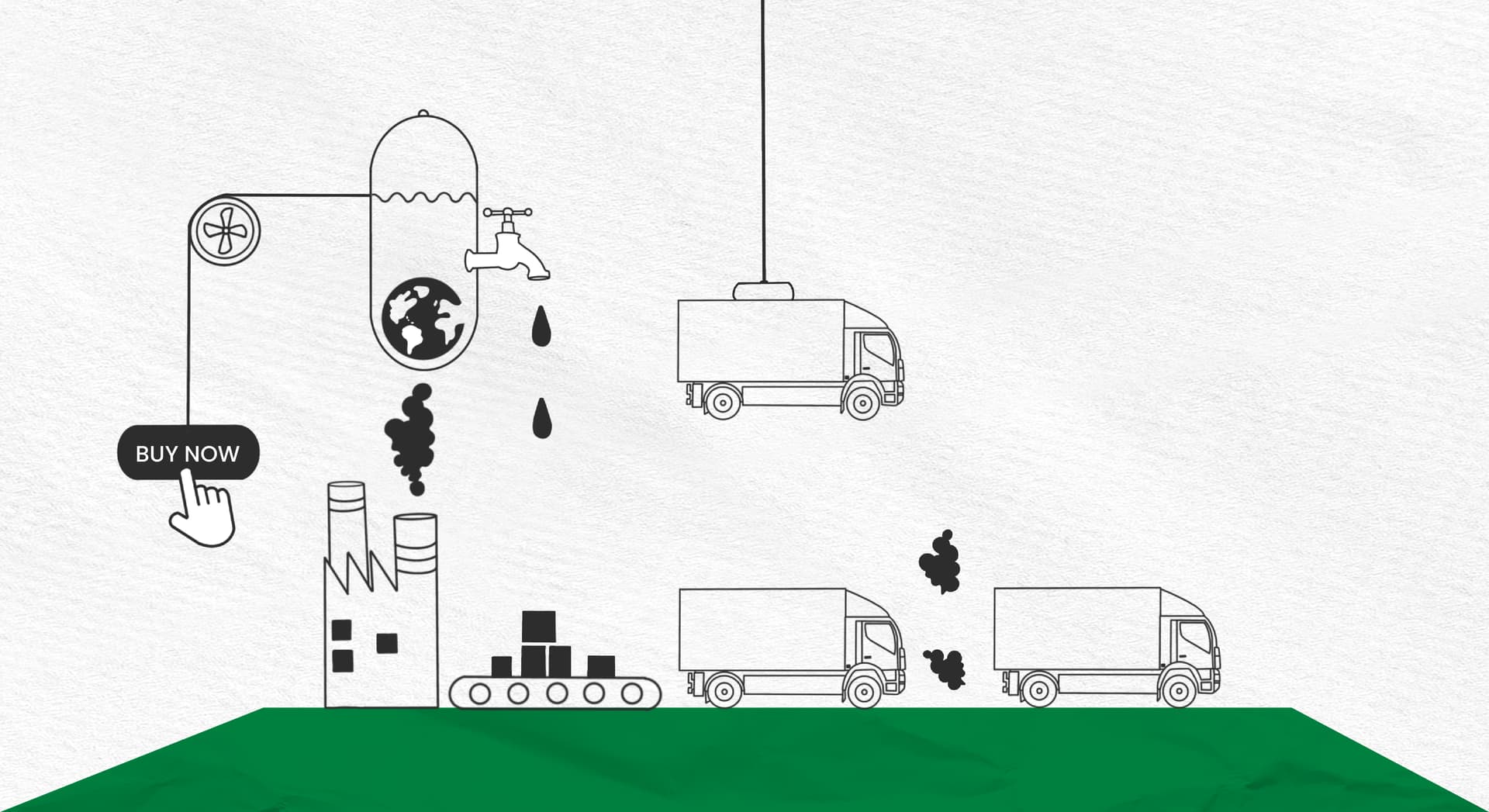
While e-commerce offers convenience and accessibility, it can also contribute to environmental and social challenges, including excessive packaging, resource consumption, product returns, and supply chain pressures. As online shopping continues to grow, organizations are increasingly examining its broader impacts. Customers, regulators, and businesses are asking how digital commerce can become more sustainable while continuing to deliver value.
Why e-commerce is failing people and the planet
With delivery trucks half full, the rise of bracketing, and more, Sidney lifts the lid on e-commerce.
Amazon, Royal Mail, and Hermes have all reported double-figure growth since the first UK lockdown in March 2020.
This can be attributed to the consumer's rising dependency on e-commerce, and with it, ever more convenient delivery services. The thing is, while greater convenience and therefore fulfillment means happy customers, it's at the expense of our planet - without which there would be no e-commerce to seek or deliver.
Sustaining life on Earth is of the utmost importance, and formal plans to slash carbon emissions and reach net-zero (by 2030 here in the UK) have been set in motion at this year's COP26. Given this commitment and the growing desire, at an individual level, to do our bit, we turn to retailers and ask: what can be done to ensure e-commerce serves both human and customer needs.
Read our complete report: Why e-commerce is failing people and the planet. As well as examining the e-commerce problem space the team propose ideas for brands wanting to implement more sustainable delivery services by being more transparent, offering a greater range of delivery options (for example) while keeping human needs and the much bigger environmental picture in mind.
If you have any feedback or would like to add to what's here, simply reach out.
Related articles
E-commerce Sustainability - FAQs
Environmental impacts can include packaging waste, transportation emissions, overproduction, and increased resource consumption. High return rates and fast-delivery expectations can further increase the environmental footprint of online retail operations. These challenges highlight the need for more sustainable approaches to digital commerce and fulfillment.
A better customer experience can help reduce waste and inefficiency. Features such as accurate product information, better sizing guidance, personalized recommendations, and transparent delivery options can reduce unnecessary purchases and product returns. Thoughtful experience design can support both customer satisfaction and sustainability goals.
Retailers can improve sustainability by optimizing packaging, reducing unnecessary returns, improving product discovery, offering repair or reuse programs, and providing customers with more environmentally responsible delivery options. These initiatives can reduce environmental impact while maintaining high-quality customer experiences.
Customers increasingly expect both convenience and environmental responsibility. Organizations that focus only on speed and volume may overlook opportunities to create more sustainable value. Balancing convenience and sustainability helps businesses build trust, respond to changing expectations, and support long-term resilience.
Sustainable e-commerce can improve operational efficiency, strengthen customer loyalty, enhance brand reputation, and help organizations prepare for future regulatory and market changes. Customers are increasingly drawn to brands that demonstrate environmental responsibility. By prioritizing sustainability alongside customer experience, businesses can create long-term value for customers, communities, and the planet.